

Social anxiety therapy in the Seattle area and online
The meeting went fine. You know it went fine. And you've spent the ninety minutes since it ended auditing your own contributions: the thing you said about the timeline, whether it came out too confident or not confident enough, whether the pause afterward meant something.
The stereotype of social anxiety is someone who can't get a sentence out. For most of the adults I work with, it's someone who speaks perfectly well and then pays for it for hours afterward.
I'm Dania Uritskiy, LICSW. I offer social anxiety therapy in person in Edmonds, just north of Seattle, and online anywhere in Washington. If your anxiety reaches well beyond social situations, my main page on anxiety therapy is a better starting point.

What running support groups taught me about social anxiety
For several years at Baltimore City Community College, part of my job was standing at the front of a room. I gave psychoeducation presentations to students and ran support groups. If you want to understand social anxiety, the first ten minutes of a group are a good place to watch it.
Some patterns came back every semester. A few people always took the seat nearest the door. Some arrived a little late, which happened to mean missing the introductions. And when a session ended there was often one person who waited for the room to empty before coming up to ask the question they'd been holding the whole hour. Frequently it was the sharpest question of the day.
That taught me something I still rely on. The socially anxious person in a room is rarely disengaged. They're doing two jobs at once, following the conversation and monitoring how they come across in it, and the second job uses up most of the energy. That's how someone can go home drained from an hour in which they barely spoke.
Groups showed me the other side too. When one person described the replay out loud, the hours spent re-auditing a two-minute exchange, others in the room usually recognized it at once. Hearing your private habit described by someone else does something my reassurance never could. It's one reason I talk about the mechanics of social anxiety so plainly in sessions. Naming them takes away some of their secrecy.
Shy, introverted, or socially anxious
A short version, because the difference changes what helps. Shyness is slow warming in new company. Introversion is about energy: socializing drains you and solitude refills you, with no dread before and no audit after. Social anxiety is about fear, and it brings all three phases with it: anticipation in the days before, self-monitoring during, a post-mortem after. Shyness usually softens once a group gets familiar. Social anxiety often doesn't, which is how someone can dread the same weekly team meeting for three years. You can be warm, funny and outgoing and still have it, which is a hard combination. You want the contact, and it costs you every time.
Replaying conversations afterward
The replay is the part people mention least and suffer from most. It can run for hours or days, hunting for the moment you embarrassed yourself.
Each pass edits the memory a little. The awkward pause gets longer. The other person's expression gets colder. After a few days you're remembering a version of the conversation that never happened, and that version becomes the evidence for why the next one will go badly. In my view the post-mortem keeps social anxiety alive far more than the event itself.
The same scanning shows up as a fear of being perceived at all: walking into a room where everyone is already seated, catching your own face in the corner of a video call, a photo you didn't get to approve. Ambiguity gets read as rejection. A short text means they're annoyed. If the replaying has spread into decisions and 3am, my page on overthinking and rumination may fit as well. If the scanning mostly turns into saying yes to keep everyone comfortable, read about people-pleasing and boundaries.
-
We start with the self-monitoring, because it's doing the most damage. Social anxiety has less to do with other people's actual judgment than with the shift that turns you into your own observer: watching your face, tracking whether you're talking too much. That's what makes conversation so tiring, and it's what keeps you from noticing that things are going fine. Learning to put your attention back on the other person changes the experience faster than almost anything else.
-
Then we work on what you've been avoiding, gradually and by plan. It starts well below your worst fear, and you choose the steps. Nobody is going to ambush you into giving a toast.
Part of this is the small habits people use to get through: rehearsing the first sentence in the car, holding a glass so a tremor won't show, asking question after question so the talk never turns to you. They feel like protection. The trouble is where the credit goes. When the evening goes fine, it goes to the glass in your hand, so you never find out it would have gone fine anyway. We set them down one at a time.
If a drink or two has become the price of admission to anything social, tell me. Before private practice I led a clinical team at a substance-use treatment provider, and I'd much rather talk about it plainly than have it sit in the background of our work.
-
Underneath, we look at the history. It's almost always something older: a family where attention mostly meant criticism, a humiliation at fourteen you never shook, a community where standing out wasn't safe. This is the attachment-based, psychodynamic part of the work, and it keeps therapy from turning into endless technique management.
-
"Just put yourself out there" assumes the problem is a lack of practice. Most of my socially anxious clients have had years of practice. They go to the party, they speak in the meeting, and they do it while running a full surveillance operation on themselves. Pushing through that way mostly teaches you that you survived by performing, and the audit afterward is just as long.
I also don't think the goal is to turn you into an extrovert. If you like small dinners better than big parties, that's a preference, and we'll leave it alone. What I care about is whether fear is the one making your choices.
Avoidance does make it grow, though. Skipping the party brings relief. Then loneliness. Then shame about the relief. And it rarely looks dramatic: the role you didn't apply for because it involved presenting, the friendship that thinned because you kept being the one who couldn't commit to plans. Each choice had a reasonable explanation. Together they've been making your life smaller.
How I work with social anxiety disorder
What socially anxious people want to know before booking
-
No. You can book the free 15-minute consultation from my contact page without speaking to anyone first, and you're welcome to email me at connect@counselingvida.com if writing is easier. The consultation itself can be by video or by phone, whichever feels less daunting.
If phones are hard for you, say so in your email. It's useful for me to know, and it's often the first honest thing someone tells me about their social anxiety.
-
Then we'll have a quiet minute, and that's fine. You don't have to arrive with a topic or keep the conversation moving. That part is my job, and I'm comfortable with silence in a way most social situations aren't.
If you do go blank, I may ask what's happening right then. A freeze in the room with me is the same thing that happens at work or at a party, except that here we can look at it while it's going on.
-
Yes. Many people trace it back to adolescence, but I also see adults who were at ease socially for years and then weren't. It can follow a public embarrassment at work, or several years of working from home, after which an ordinary office lunch starts to feel like a performance.
Social ease works a bit like a muscle you stop using. Coming back to it feels awkward, and the awkwardness gets mistaken for proof that something is wrong with you. In my experience, social anxiety that arrives later in life often loosens sooner, partly because you remember being otherwise.
-
The two overlap a great deal, and clinicians don't always agree on where one ends and the other begins. Roughly, avoidant personality disorder describes a more pervasive sense of being inadequate or unlikable that runs through most of life and most relationships. Social anxiety is more often tied to particular situations, like meetings or parties.
I don't think the label decides much about our work. The fear of rejection and the history behind it get worked with in similar ways either way. If having a name for it matters to you, we can talk about that directly.
-
Yes, and it comes up a lot. Dating puts you across the table from a stranger whose whole purpose that evening is to decide about you, and then hands you an ambiguous ending to analyze for days. Some people avoid it entirely. Others go on the dates and monitor themselves so closely that afterward they couldn't say whether they liked the other person.
That last question is usually where we start. Whether you liked them is the one that matters, and social anxiety tends to crowd it out.
-
Slowly, and mostly through repetition. Adult friendships tend to grow out of seeing the same people again and again, at a weekly class or a running group, much more than out of one great conversation. That's good news if you have social anxiety, because repeated contact lowers the stakes of any single meeting.
The harder part is the follow-up: sending the text that suggests a second plan, and risking a no. That's where most socially anxious people stall, and it's very workable in therapy.
-
Not at the moment. For social anxiety I work one on one, online or in my Edmonds office. I ran groups earlier in my career and still think well of them. If you'd like a group alongside our work, I'm glad to talk through what to look for in one.
-
Then I'll follow your lead. If you say hello, I'll say hello back. If you'd rather not acknowledge me, I won't take it personally and I won't approach you first, so nobody you're with has to know how we know each other.
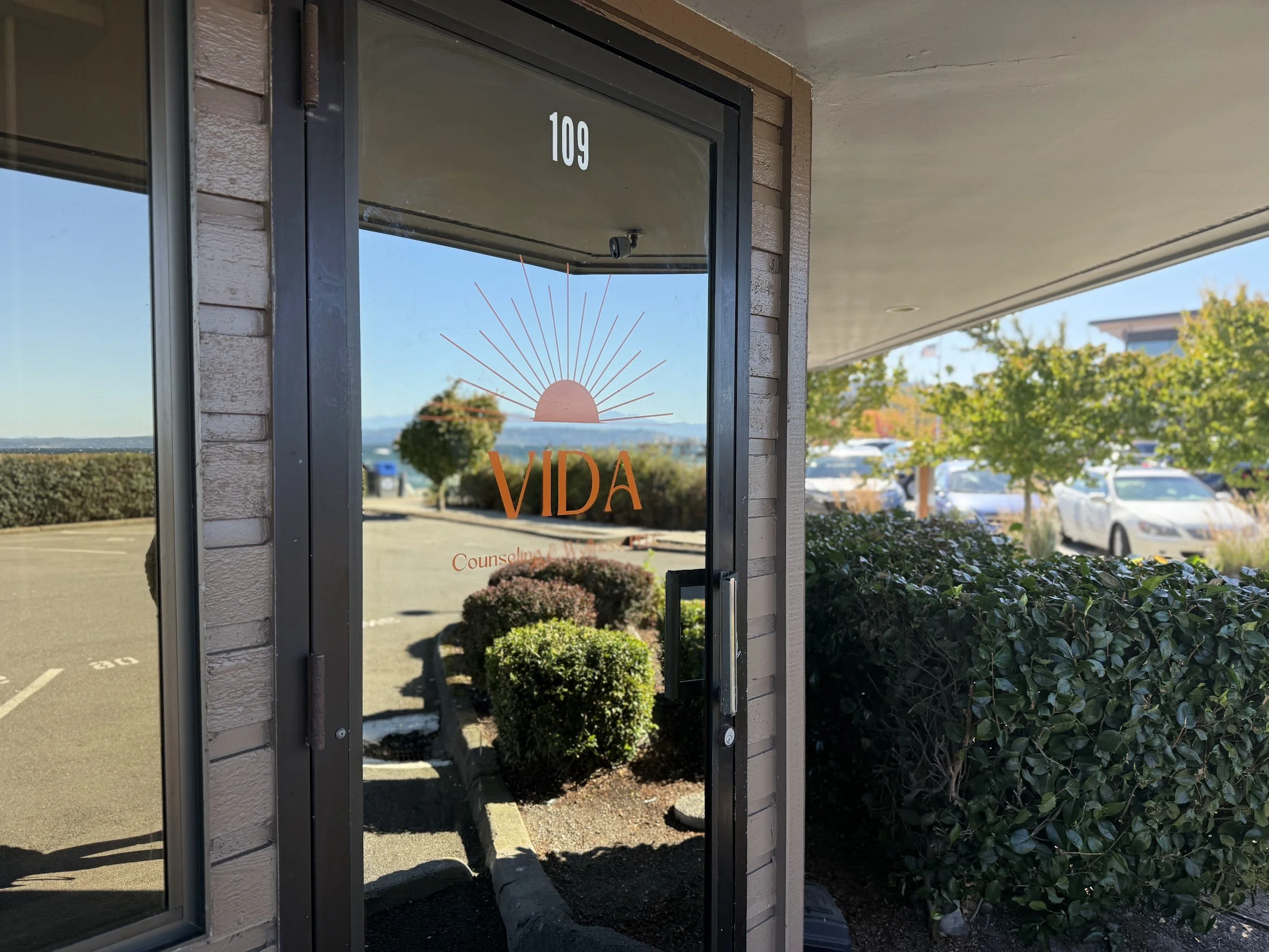
It's a reasonable thing to wonder about when my office is near the waterfront and you might be standing behind me in line for coffee. Most of my clients see me online, so for many people it never comes up.
What happens next
You pick a time for us to meet directly on my calendar. Fifteen minutes, free, video or phone. You don't have to have the words ready or fill out long forms, I understand the first step can be difficult.
We meet virtually and talk about what's going on. I'll tell you honestly whether I'm the right fit, and if I'm not, I'll point you toward someone in my network who is.
If it feels right, we schedule your first full session, usually within a week. I see clients at my office in Edmonds on the waterfront, or virtually across Washington State.