
Inter-generational Trauma: The Pain We Inherit
Have you ever wondered why certain patterns keep repeating in your family — the same anxieties, the same silences, the same ways of loving that leave everyone a little lonely? Or why you carry fears and reactions that don't seem to trace back to anything that happened to you?
Sometimes the pain we hold isn't only our own. It was handed down — through parenting, through the body, through what was never said as much as what was — from people who came before us and never had the chance to heal.
This is intergenerational trauma: the way the wounds of one generation ripple into the next. Understanding it can be profoundly freeing, because it helps explain patterns that once felt like personal defects. And it opens a powerful possibility: that the cycle can end with you.
What Intergenerational Trauma Is
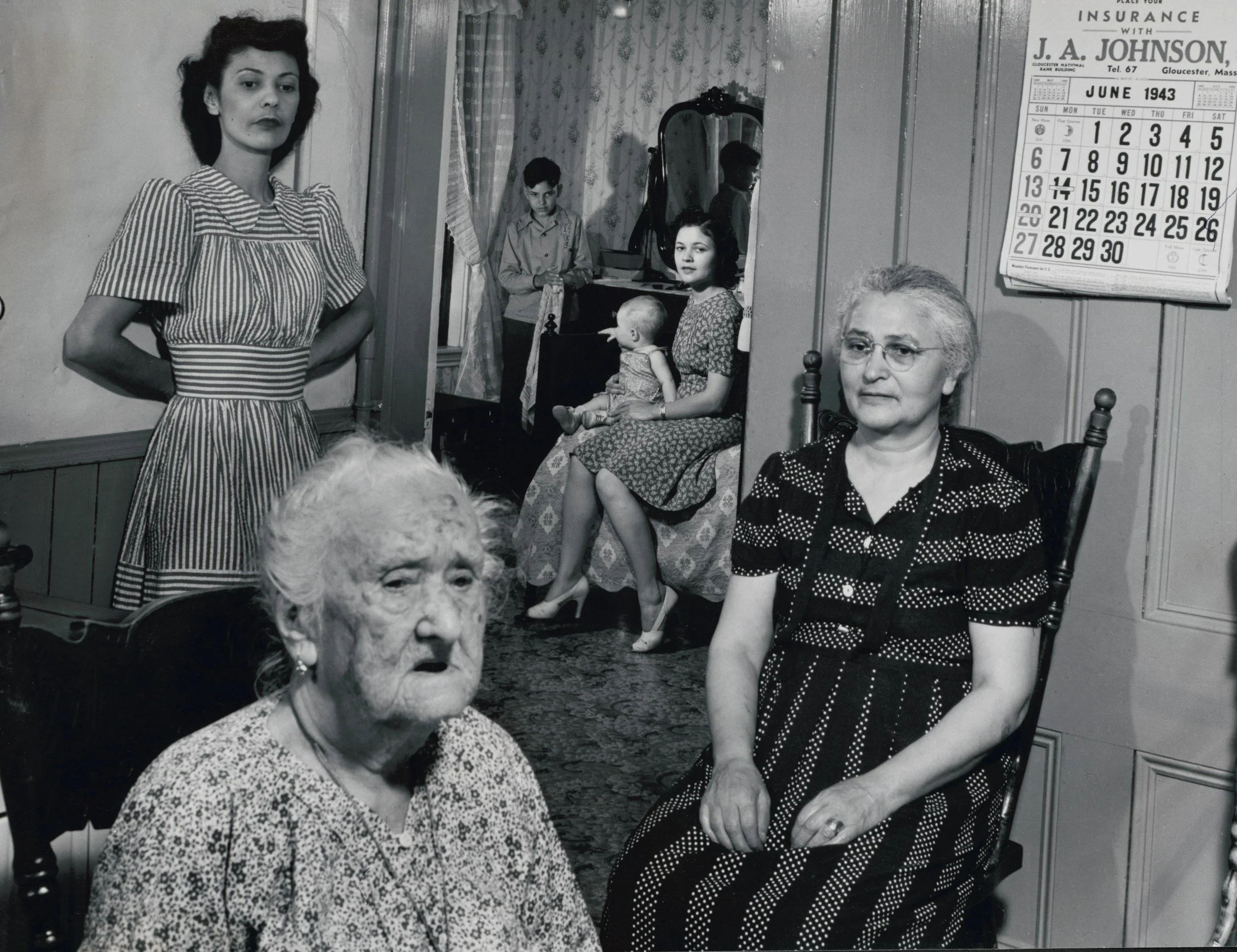
“Some of what you carry was never yours to begin with. It was handed to you by people who were also just trying to survive.”
Intergenerational trauma (sometimes called generational or transgenerational trauma) refers to the transmission of the effects of trauma from one generation to the next. The original trauma might have been war, genocide, colonization, slavery, immigration under duress, poverty, abuse, or loss — experiences so overwhelming they shaped the people who lived through them, and through them, their children.
The children of trauma survivors often inherit not the event itself, but its imprint: the fear, the vigilance, the emotional patterns, the coping strategies, the silences. A parent shaped by scarcity may raise anxious children around food or money. A grandparent's untreated trauma may echo as emotional distance across three generations. Migration sets its own version of this in motion, because what was left behind is so rarely discussed with the generation that never saw it.
Much of what we understand about this began with a specific, painful question. In the years after the Holocaust, clinicians noticed something they hadn't expected: the grown children of survivors — people who had never been in a camp, never lived through the war — were showing up in therapy with elevated rates of anxiety, depression, and stress-related difficulties. Decades of study since have found that offspring of survivors can carry measurable differences in their stress-hormone regulation — evidence that trauma's effects can extend beyond the person who directly lived it (Yehuda & Lehrner, 2018, *World Psychiatry*). If you've ever felt like you're grieving something you never experienced, this is part of why that can be literally true.
The trauma wasn't yours. But its fingerprints can be all over your nervous system.
How Trauma Gets Passed Down
Parenting and attachment. A caregiver shaped by their own unhealed trauma may struggle to be consistently attuned, safe, or emotionally available — and that shapes how their children learn to relate. This pathway has been documented directly: research shows that a parent's own "state of mind" about attachment predicts their infant's attachment security — the way we were cared for shapes the way we care, across generations (*Verhage et al., 2016, *Psychological Bulletin*).
Learned patterns and beliefs. Families pass down rules like "we don't talk about feelings," "trust no one," or "always be prepared for the worst."
Silence and secrets. What can't be spoken often gets transmitted anyway — as tension, avoidance, or a felt sense that some topics are dangerous.
The nervous system. Children absorb their caregivers' states of activation or shutdown, learning fear and vigilance before they have words.
Biology. Emerging research suggests trauma may even leave marks on how genes are expressed, potentially influencing stress responses in descendants.
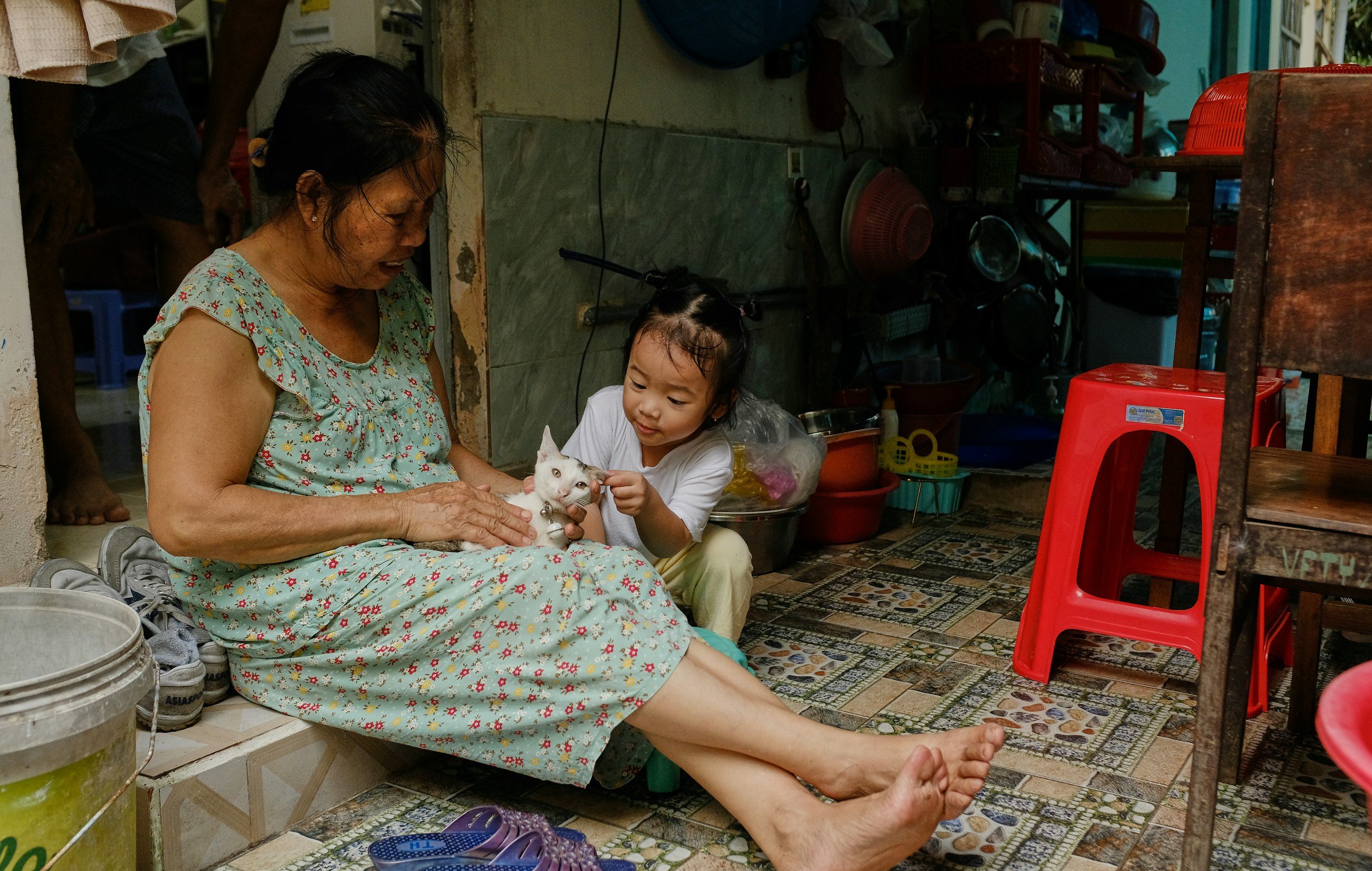
Trauma travels not through blame, but through love shaped by pain — the only way people knew how to parent from what they were given.
That last pathway is the one that surprises people most. A striking 2016 study of Holocaust survivors and their adult children found altered patterns of methylation — a kind of chemical "tagging" that influences how genes are switched on and off — on a gene involved in regulating the stress response, in both the parents and their offspring (Yehuda et al., 2016, *Biological Psychiatry*). This field, called epigenetics, is still young and hotly debated, and it does not mean your trauma is "in your DNA" permanently. What it suggests is gentler and more hopeful: our bodies keep a record of what our ancestors endured, and because these marks are about gene expression rather than the genes themselves, the story isn't fixed. Environments of safety, and healing, can influence that expression too.
Animal research offers a vivid illustration of how experience — not just genes — gets transmitted through caregiving. Rat pups who receive more nurturing (licking and grooming) grow into calmer adults with better-regulated stress responses, and this pattern gets passed to the next generation through the mothering behavior itself, not through inheritance of DNA — and it can be reversed by changing the early environment (Zhang & Meaney, 2010, *Annual Review of Psychology*). It's a hopeful finding: what care can inscribe, different care can help rewrite.
How It Shows Up in Your Life

Anxiety, hypervigilance, or a chronic sense of danger that doesn't match your actual life
Difficulty with emotional expression, because feelings weren't safe in your family
Repeating relationship or parenting patterns you swore you'd break
A pervasive sense of shame, unworthiness, or "not enough" with no clear origin
Survival-based beliefs about scarcity, safety, or trust that don't fit your circumstances
Feeling responsible for family pain, or carrying grief that isn't quite your own
One reason these patterns are so sticky is that adversity tends to compound down a family line. A large 2017 meta-analysis pooling data from more than 250,000 adults found a powerful, dose-dependent relationship: the more categories of childhood adversity someone experienced (abuse, neglect, a household marked by addiction, mental illness, or violence), the higher their risk of depression, addiction, chronic illness, and early death (Hughes et al., 2017, The Lancet Public Health). The intergenerational piece is the quiet implication: a parent overwhelmed by their own unhealed adversity is more likely, without ever intending to, to pass adversity along. Seeing this clearly isn't about assigning blame. It's about understanding the machinery well enough to interrupt it. Families don't always hear it that way, and being read as the one making accusations is its own obstacle to getting help.
How to Break a Cycle of Inherited Trauma: A Self-Help Guide

Name the patterns without blame. Write down the recurring themes you notice across your family — the silences, the fears, the ways love was expressed or withheld. Seeing the inherited threads on paper, while remembering your ancestors were often doing their best with what they were given, begins to loosen their grip.
Grieve what was passed down. Let yourself feel sad, and even angry, about what you inherited and about what your caregivers never got to heal. Naming the loss out loud — to a journal, a trusted friend, or a therapist — is part of setting it down rather than passing it on.
Reparent yourself. When the old fear or shame surfaces, practice offering yourself the steadiness you may not have received: a hand on your chest, a slow breath, a kind sentence like "I'm safe now, and I've got you." Repeated small moments of self-attunement rewire the pattern from the inside.
Build felt safety in your body. Because inherited trauma lives in the nervous system, gentle somatic practices (slow exhales, feeling your feet on the ground, walking in nature) help your body learn what your mind already knows: the danger is over. I've written separately about why that last one does as much as it does.
Break the silence deliberately. Choose to name a feeling, ask a hard question, or speak a family truth that was always avoided. Each act of open connection interrupts transmission to the next generation.
Interrupt the pattern in real time. When you catch yourself reacting the way your parent or grandparent did, pause and choose one small different response. These micro-choices are where the cycle actually changes hands.
How Therapy Can Help
Self-help can carry you a long way, but inherited trauma has a particular challenge: many of its patterns were formed in relationship, before you had words, and they tend to stay invisible to us precisely because they feel like "just how I am." That's where therapy adds something you often can't give yourself. In a steady, attuned relationship, the old patterns don't just get discussed — they get gently activated and, this time, met with safety instead of fear. That experience of co-regulation, of your nervous system borrowing another person's calm, is one of the most direct ways the body updates its expectations.
My approach is relational psychodynamic and attachment-based, which is especially suited to this work. Together we trace the threads that connect your present reactions to the family story you were born into — not to dwell in the past, but to make the unconscious conscious, so it stops running the show. We also attend to what happens in the room between us, because the way you learned to attach shows up there, and it can be repaired there. For many cycle-breakers, therapy is the first relationship where they experience what it feels like to be fully seen without having to earn it. That felt sense becomes the template for everything downstream — including how they parent, partner, and treat themselves.