
Anxiety about being perceived is the discomfort of knowing you can be seen, and of feeling that being seen means being judged. It shows up crossing a room to get coffee, unmuting on a call, posting a photo, saying your name to a receptionist. Nothing bad has to happen. The possibility that someone is forming an impression is enough to make you want to fold yourself up smaller.
It's related to social anxiety, and some people who feel it would meet the description of social anxiety disorder. Many wouldn't. They do fine in meetings and at parties, then spend the drive home replaying how they came across. I see this a lot, and in my experience it's held in place by a handful of beliefs that feel like facts. Here are the five I hear most, and what I'd say back.

The fear of being perceived is the fear of being seen and judged before you've had a chance to control the impression.
"Everyone noticed."
You tripped on the step, or your voice cracked on the second sentence, or you laughed at the wrong moment. In your memory the room went silent and every head turned.
Mostly, it didn't. People notice far less about us than we assume, because each of them is busy with their own version of the same worry. The coworker you're sure saw your hands shaking was probably thinking about what she was going to say next. Researchers have a name for this, the spotlight effect, and it's stronger in people who are anxious about how they come across.
When I ran support groups for community college students in Baltimore, this was one of the things that struck me most. A room full of people each convinced they were the most visibly nervous person there, and each too busy managing their own nerves to track anyone else's.
"They can see how anxious I am."
This one feels airtight, because the evidence is so loud. Your face is hot. Your heart is going. Surely it's written all over you.
It usually isn't, or not nearly as much as you feel it. The inside of anxiety is much louder than the outside. People who watch a nervous person give a talk tend to rate them as calmer than the speaker rates themselves, often by a wide margin. What you feel at full volume, other people pick up faintly, if they pick it up at all.
Your body broadcasts your anxiety to you at full volume and to everyone else at a murmur.
That doesn't mean nobody ever sees it. Sometimes they do. And what they tend to see is a person who's a bit nervous, which is about the most ordinary thing a human can be.

You are the main character in your own story and a background extra in everyone else's. That's not sad. It's freeing.
"If I watch myself closely enough, I'll come across fine."
This is the belief that does the most damage, because it sounds like a solution. You monitor your voice, your posture, your facial expression, what your hands are doing, whether you've talked too long. You edit in real time.
The cost is that all your attention is pointed inward. You stop hearing what the other person is saying, so you miss the cues that would tell you it's going fine. Then you leave with nothing to go on except your own anxious read of yourself, which is the least reliable source available.
The fix sounds too simple, though it's hard in practice: put your attention on something outside you. The actual words the other person is using. The color of their sweater. The problem you're both trying to solve. You can't study yourself and the conversation at the same time, and the conversation is the better place to be.
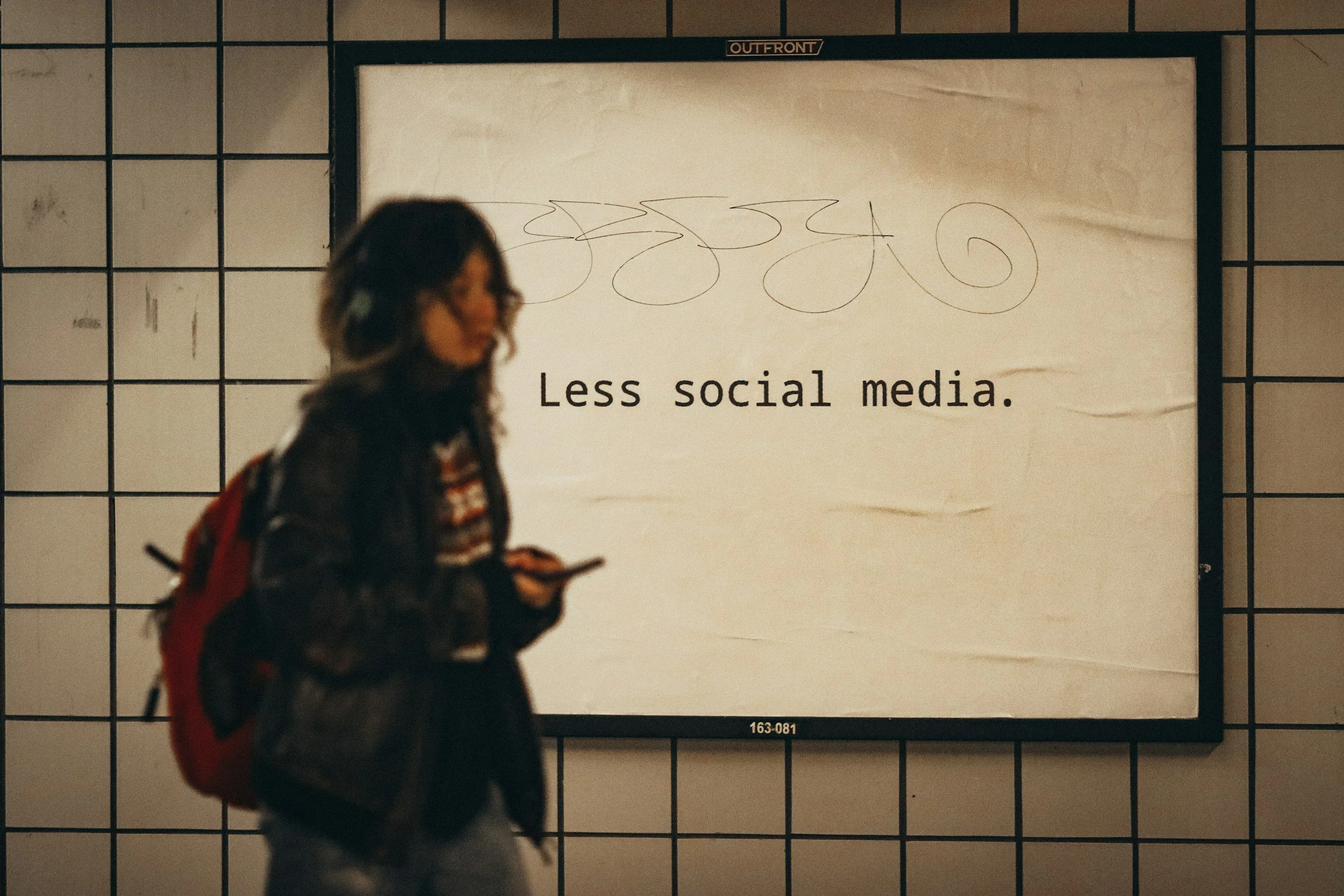
You learned that being seen was dangerous. With support, you can learn that you're allowed to be here, in full view, and be okay.
"It's all in my head."
This is where I part ways with a lot of advice about being perceived. Some of it is in your head. Some of it isn't.
If you have an accent, or a name people stumble over, or you're the only person in the room who looks like you, you're being perceived more than average. That's just accurate. People do hear the accent. They do pause at the name and sometimes make a little joke about it. When I introduce myself as Dania Uritskiy, there's often a beat while someone tries to fit a Latina face to a Russian last name. (It's my husband's.) None of that is imagined, and telling someone in that position that nobody's paying attention is both untrue and a little insulting.
I grew up speaking Spanish at home and English everywhere else, and switching between the two teaches you early that how you sound changes how you're treated. Many bilingual and bicultural people get very good at adjusting, and the adjusting becomes a second job nobody pays for. I wrote about that in code-switching as a survival strategy.
So the goal isn't to convince yourself nobody notices. It's to sort out which perceiving is real and which is amplified, and to stop treating every room as if it were the hardest one you've been in. The meeting where you really are the only one with an accent is different from the dinner with old friends. Anxiety tends to blur them together.
If being seen as "different" has also left you unsure where you belong, my post on cultural identity confusion may speak to that, and so might my page on bilingual, bicultural therapy.
"I'd stop being anxious about being perceived if I just stopped caring what people think."
You can't stop caring, and I wouldn't want you to. Humans are wired to track how they stand with other people. A person who really didn't care at all would be hard to be around.
What helps is caring in proportion. The opinion of your closest friend matters. The opinion of the stranger behind you at the pharmacy really doesn't, and it lasts about four seconds anyway. A lot of the work is giving people back their own impressions. They're allowed to have them. You don't have to manage what goes on in someone else's head, and you couldn't if you tried.
The other piece is practice, in small, deliberate doses. Some ideas people find useful:
Say your name the way it's actually pronounced, once, without apologizing for it.
Ask the question in the meeting before you've rehearsed it three times.
Post the photo you like that isn't perfect.
Walk into the room and let the first few seconds be awkward.
Afterward, notice what happened compared with what you predicted. Most of the time the gap is large, and each time you see it, the prediction loses a bit of its authority. If you tend to second-guess yourself afterward, the post on trusting your own decisions again covers some of the same ground.
For most people this fear started somewhere specific: a family where being noticed meant being criticized, a school where standing out wasn't safe, a move to a country where your voice marked you. Therapy gives you a place to be looked at steadily by someone who isn't going to flinch, which turns out to matter. If you're weighing whether to start, I wrote about what to look for in an anxiety therapist.
My work on this kind of fear is described on the social anxiety therapy page, and you're welcome to reach out from there.