
What Is Cultural Identity Confusion — and Why It Feels So Isolating
There's a specific loneliness that comes from belonging to two worlds and feeling fully at home in neither.
Maybe you're too "American" for your family and too "foreign" for your friends. Maybe your Spanish isn't good enough for your grandmother, but your accent still marks you as other in the room. Maybe you code-switch so fluidly that you've started to wonder which version of you, if any, is the real one. There's a phrase that captures this ache so precisely it's become a kind of shorthand across the Latino diaspora: ni de aquí, ni de allá. Not from here, not from there.
If that phrase lands somewhere deep in your chest, you're not broken, and you're not alone. You may be experiencing what psychologists call cultural identity confusion. And it deserves to be named, understood, and treated with tenderness.
What Cultural Identity Confusion Actually Is

You are not too much of one thing or not enough of another. You are standing in a place most people never have to name.
Cultural identity is the sense of belonging you draw from a group. Your ethnicity, language, traditions, values, and history. For people who grow up between cultures (immigrants, children of immigrants, mixed-heritage families, third-culture kids) that sense of belonging can feel less like a solid foundation and more like standing with one foot on each of two drifting boats.
Cultural identity confusion is the disorientation, self-doubt, and sense of not-belonging that can arise when the cultures you're part of send conflicting messages about who you're supposed to be. It shows up as questions that refuse to resolve into clean answers:
Which culture do I belong to?
Am I betraying my family by embracing this new world, or betraying myself by clinging to the old one?
Why do I feel like a visitor everywhere, even at home?
This isn't the same as simply being bicultural, which can be a genuine strength. The people who fare best psychologically, decades of acculturation research suggests, are those who manage to keep their heritage culture and engage the new one at the same time, biculturalism, when it holds together, tends to predict better wellbeing rather than worse (Sam & Berry, 2010). Confusion is different. It arises when the two worlds feel irreconcilable. When you feel you have to choose, and every choice feels like a loss.
Why It Happens: Caught Between Cultures
When you live between cultures, you're constantly translating, not just language, but values, expectations, and versions of yourself. The most influential map of how people manage this comes from the study of acculturation, which sorts the possibilities into four broad strategies, defined by two questions: do you hold onto your heritage culture, and do you engage with the new one (Berry, 2005).
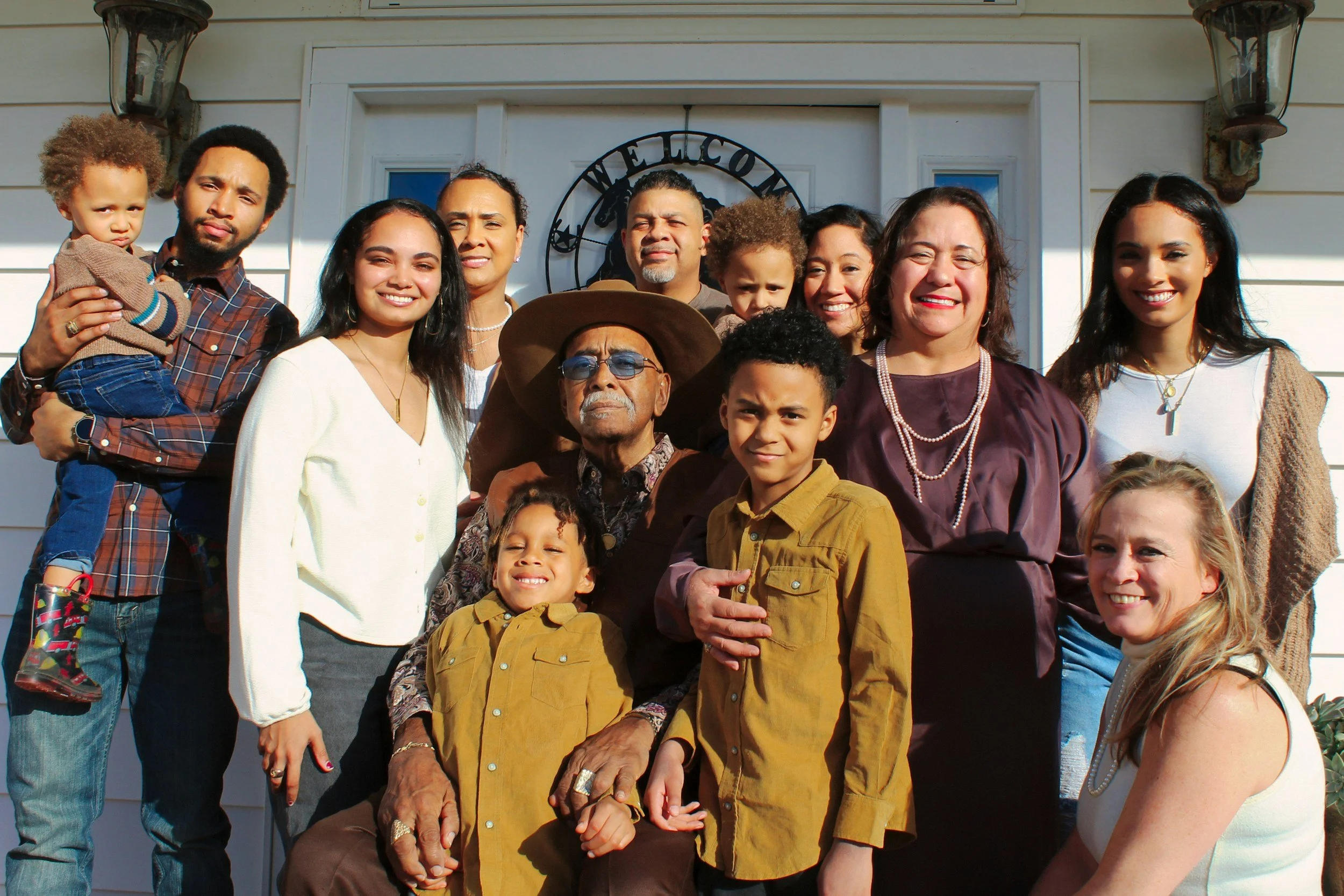
Two cultures in one person is not a contradiction that needs resolving.
Integration: weaving both cultures into a coherent whole. This is the strategy linked to the best mental-health outcomes.
Assimilation: adopting the new culture and letting go of the heritage one.
Separation: holding onto the heritage culture and turning away from the new one.
Marginalization: feeling disconnected from both. This is where cultural identity confusion tends to live, and it's tied to the worst outcomes.
The hard part is that you don't always get to choose your strategy. Family loyalty pulls one way; the longing to belong in your new home pulls another. Discrimination or feeling unwelcome can push you out of the dominant culture just as pressure to "not lose your roots" pushes you back toward the heritage one. Caught in the middle, it's easy to feel like you're failing everyone, including yourself.
That in-between position carries a real cost, and there's a name for it. Living in a chronically othered, stigmatized position generates a distinct, ongoing load of stress (from vigilance, from concealment, from the daily friction of not fitting the expected mold) and that load accumulates into measurable distress over time. This is the heart of the minority stress framework (minority stress and mental health, 2016 review). When you never quite belong anywhere, the strain isn't in your imagination. It's the predictable result of your circumstances.
What This Costs. And Why It's Not Permanent
Cultural identity confusion isn't only an emotional experience; it's tied to real outcomes. Across roughly 5,000 immigrant adolescents studied in 13 countries in 2006, the young people connected to both their heritage and their new society showed the best psychological and social adaptation, while those in a diffuse profile, unsure of where they stood and connected to neither, showed the worst (Berry, Phinney, Sam, & Vedder, 2006). The confusion, in other words, isn't cosmetic. It shapes wellbeing.
And yet the same body of research offers real hope, because it shows the confusion is usually a stage, not a life sentence. Ethnic identity tends to develop in phases, from an unexamined identity you've never really thought about, through a period of active exploration, toward an achieved, secure sense of who you are. Those who move through that exploration toward a grounded identity, rather than avoiding the question, tend to report higher self-esteem and better psychological wellbeing (ethnic identity and wellbeing across development, 2007).
Later work made that finding robust. Pooling studies across many ethnic and racial groups, a large 2014 meta-review found that a positive, explored ethnic-racial identity is consistently linked to better outcomes, psychological adjustment, academic performance, even physical health (Rivas-Drake et al., 2014). The takeaway is quietly powerful: the goal is to explore, and to arrive somewhere that feels like yours.

Belonging is something you can build within yourself.
Why It Feels So Isolating
Part of what makes cultural identity confusion so painful is that it's hard to explain to the people around you. Friends from the dominant culture may not understand why family gatherings feel so fraught. Family may not understand why you feel like an outsider in the very culture you came from. So you end up carrying it privately, wondering if something is wrong with you.
You may also recognize the exhaustion of code-switching (shifting your speech, humor, and self-presentation depending on the room), which can deepen the sense that no single environment ever gets to see all of you. When every space asks for a different version of yourself, it's easy to lose track of who you are underneath. This is exactly the kind of chronic, low-grade vigilance Meyer's minority stress work describes: not one dramatic wound, but the steady tax of never being able to fully relax into belonging.
What Helps: From Confusion Toward Belonging
You don't have to resolve this by picking a side. Healing here looks like weaving your identities together rather than amputating one of them. It's worth remembering that Phinney's research frames this as a developmental journey. One you're allowed to still be in the middle of.
How to Find Your Footing Between Cultures: A Self-Help Guide
Name it without judgment. recognizing "this is cultural identity confusion, and given my life it makes complete sense" can loosen the grip of shame. Naming an experience turns a vague ache into something you can work with.
Reject the either/or. You are not half of one culture and half of another. You're a whole person who contains both. Hyphenated identities are complete identities. The research on integration suggests that and is healthier than or.
Practice self-compassion instead of self-judgment. Kristin Neff's work on self-compassion shows that treating yourself with the kindness you'd offer a friend measurably reduces shame and harsh self-criticism. When the inner voice says "you're not enough of either," meet it with warmth rather than agreement.
Find your "third space." Seek out others who live between cultures. People who don't need you to explain the joke or translate the grief. Community with fellow bicultural people can be healing precisely because nothing has to be justified.
Reconnect on your own terms. You get to choose which traditions, foods, values, and languages you carry forward. Reclaiming your heritage doesn't require accepting all of it, an explored identity, in Phinney's sense, is one you've actively chosen, not one handed to you.
Grieve what was lost. There is real loss threaded through migration and acculturation, of language, place, people, and belonging. Grieving it is honesty. If this resonates, you may find our post on assimilation and migratory grief a gentle next step.
Reduce the code-switching load where you safely can. You can't drop your guard everywhere, but you can build at least one or two relationships where all of you is welcome at once. Even a single space with no performance required lightens the cumulative weight.
Making Room for Both Halves
Self-help can carry you a long way, but there are things that only happen inside a relationship. Cultural identity confusion is often, at its core, a story about belonging. And belonging is something we learn, first and most deeply, in connection with other people. Therapy offers a relationship where every part of you is welcome at the same time: the heritage self and the adapted self, the language of home and the language of here, the loyalty and the longing. Nothing has to be split off or performed.
In my practice, this work often means gently integrating fragmented self-states, the different "versions" of you that showed up in different rooms, into a single, more coherent sense of who you are. My approach is relational psychodynamic and attachment-based, which means we pay attention to how belonging (and its absence) got wired into you early, and how it plays out now. It's also explicitly multicultural and trauma-informed, so your cultural context isn't background noise. It's central to the work. Together we can make sense of the patterns, process the grief of the in-between, and build an identity that holds all of who you are rather than forcing a choice.
I offer therapy in English and Spanish, so you can bring whichever language holds the feeling. No code-switching required.