
Walk-and-Talk Therapy in the Seattle Area: Nature as a Co-Therapist
Some of the best conversations of your life probably didn't happen sitting across a table from someone. They happened side by side — on a walk, in a car, on a trail — when your hands were busy and your eyes had somewhere to land other than another person's face.
There's a reason for that. And it's the same reason a growing number of people in the Seattle area are choosing to do their therapy not in an office, but outdoors, moving through the very landscape that makes the Pacific Northwest what it is.
It's called walk-and-talk therapy, and it treats nature as a kind of co-therapist. If sitting still in a quiet room has never quite felt like you, this post is worth a read.
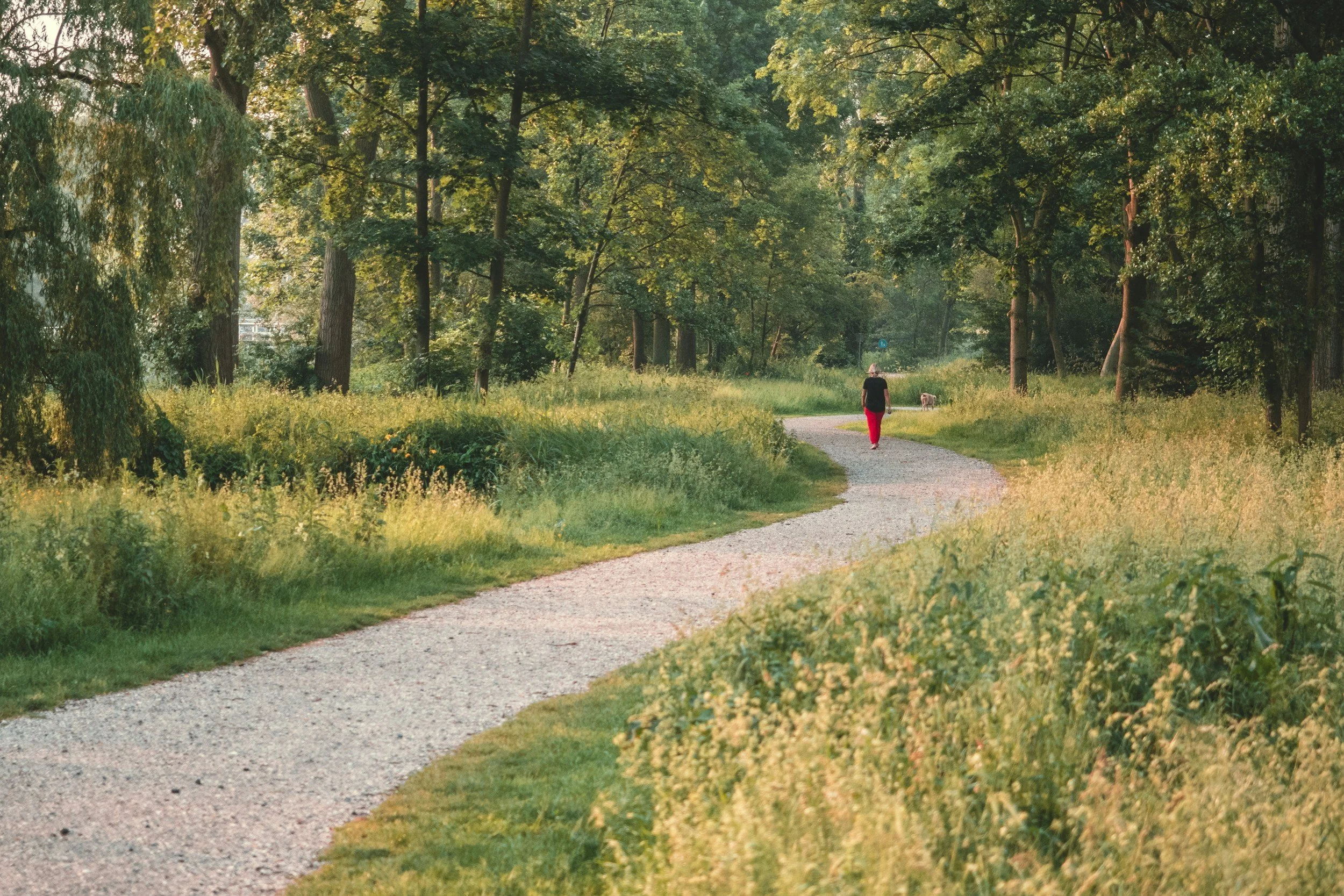
When your body is at ease and your eyes have somewhere to rest, your words often find their way out more gently.
What Is Walk-and-Talk Therapy?
Walk-and-talk therapy is exactly what it sounds like: a licensed therapist and client hold their session while walking together outdoors, usually on a quiet path or trail, instead of in an office.
It's the same real therapy, the same confidentiality, the same clinical training, the same depth of work. The only thing that changes is the setting. Instead of two chairs and four walls, you have a path, fresh air, and the rhythm of your own footsteps.
For many people, that shift changes everything about how it feels to open up.
Why Walking Helps You Open Up
There's something about the side-by-side arrangement that lowers the stakes. Direct eye contact, while powerful, can also feel intense, especially when you're talking about something tender. Walking lets you look ahead, at the trees, at the water, and speak more freely.
Movement matters too. When we move, the body's stress response has somewhere to go. This isn't just intuition: research from 2013 found that physical exercise reorganizes the brain in a way that helps it stay calmer under stress, reducing the excitability of neurons that fire during anxiety (a study on exercise and the anxious brain). In plain terms, a moving body is often a more settled body. And a settled body finds it easier to say hard things.
Who Walk-and-Talk Therapy Tends to Help
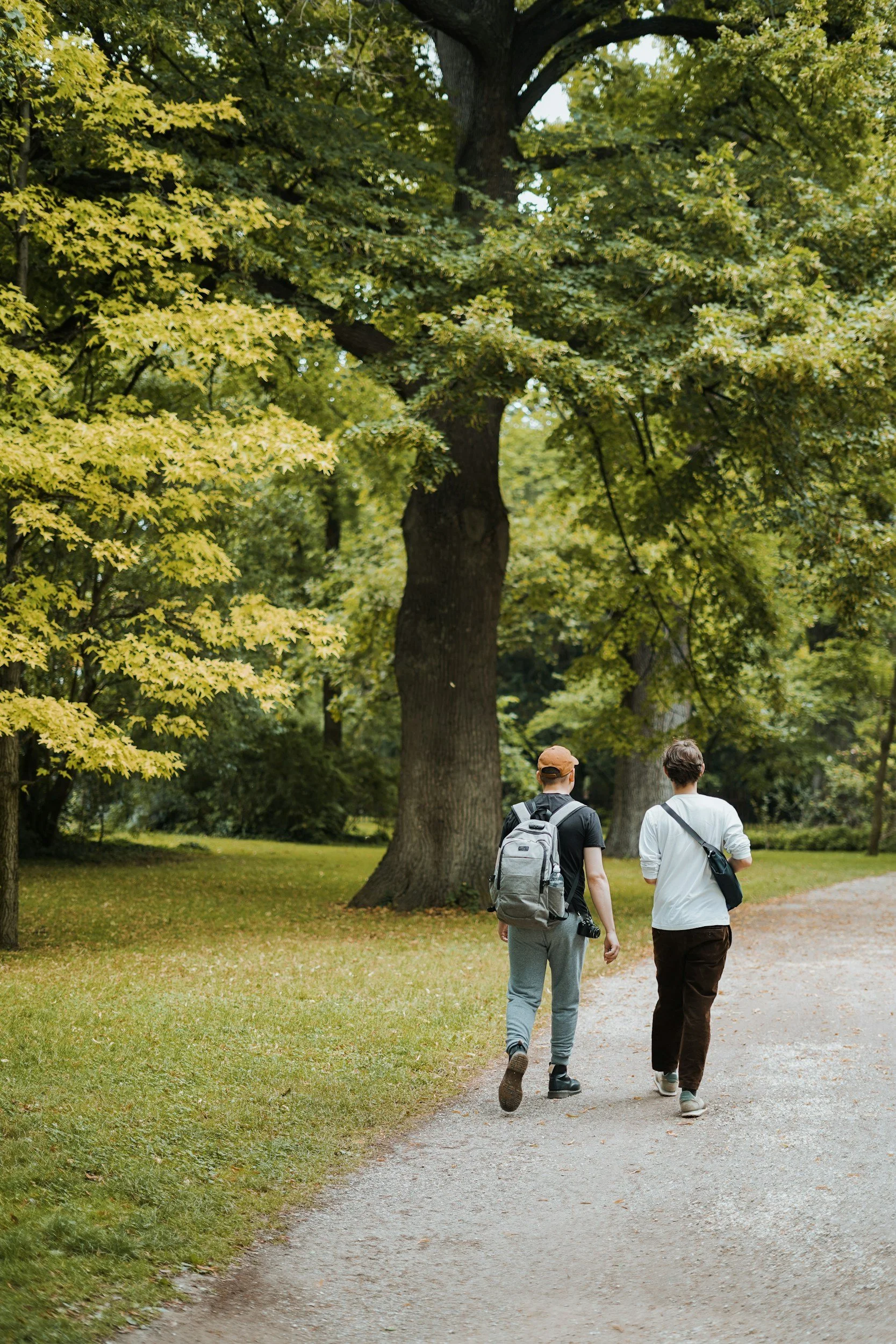
Sometimes the hardest things are easier to say when you're moving forward, side by side, with somewhere to look.
This approach isn't for everyone, and that's okay. But it tends to resonate with people who:
Feel restless or fidgety sitting still in a traditional office.
Think and process better while moving, the ideas come loose once the feet start going.
Spend all day indoors and on screens and crave time outside.
Find eye-to-eye conversation intense and open up more easily side by side.
Are working on anxiety, stress, burnout, or life transitions, where the calming effect of nature is especially welcome.
Want to build a sustainable habit of getting outside and moving as part of caring for themselves.
If sitting in a waiting room has always made your shoulders climb toward your ears, moving your session outdoors might be a genuine relief.
The Seattle Area Is Made for This
Few places are better suited to outdoor therapy than the greater Seattle area. Between Edmonds, Lynnwood, Shoreline, and North Seattle, we're surrounded by walkable waterfronts, wooded parks, and quiet trails, the Edmonds marsh and waterfront, the Interurban Trail, the green corridors threading through Shoreline and Mountlake Terrace.
There's growing evidence that the kind of nature we're rich in here matters. A 2017 review of research on so-called "blue spaces" (coastlines, lakes, the Puget Sound shoreline) found that living near and spending time by water is associated with better mental health and lower psychological distress (research on blue space and well-being). The forests and shorelines that define this region aren't just pretty scenery; they may be part of the treatment.
Yes, it rains. But part of PNW mental health is making peace with the weather rather than hiding from it, and a good rain jacket turns a gray day into a perfectly good session.
Why Nature Itself Does Quiet Work on the Mind
The idea that nature supports mental health is well beyond folk wisdom at this point.
A large 2019 study of nearly 20,000 people in England found that those who spent at least 120 minutes a week in natural environments reported significantly better health and well-being than those who spent none, a striking, dose-like relationship, and one that held whether people got their two hours in a single visit or spread across the week (research on a weekly "dose" of nature). It suggests there's a genuine "dose" of nature worth aiming for, and a walking session is an easy way to reach it.
Nature also appears to quiet the very rumination that fuels anxiety and depression. In an elegant 2015 experiment, participants took a 90-minute walk either through a natural setting or along a busy road. The nature walkers came back reporting less brooding. And brain scans showed reduced activity in the subgenual prefrontal cortex, a region tied to repetitive negative thought (a study on nature walks and rumination). The trees, it turns out, help interrupt the spiral in your head.
And physical activity is a robust mood-booster in its own right. One of the largest studies of its kind, published in 2018, analyzed exercise and mental-health data from more than 1.2 million Americans and found that people who were physically active reported about 43% fewer days of poor mental health each month than those who weren't, with the strongest benefits at moderate, sustainable amounts of activity, exactly the kind a walking session provides (research linking exercise to fewer bad mental-health days). The World Health Organization now formally recommends regular physical activity as a way to support mental as well as physical health.
Some of this benefit may come from nature working on the body directly. Research from 2010 on the Japanese practice of shinrin-yoku, or "forest bathing," compared time spent among trees with matched time in a city and found that the forest setting reliably lowered the stress hormone cortisol, slowed heart rate, and shifted the nervous system toward its calming parasympathetic branch (a study on forest bathing and stress). A walking session among the region's evergreens isn't only good for the legs; it appears to physically down-shift a keyed-up nervous system.
A Few Honest Practicalities
Confidentiality outdoors. We choose quiet routes and pause or adjust the conversation if we pass others, so your privacy is protected.
Weather and accessibility. Sessions can flex indoors or to telehealth on days that don't cooperate, and routes are chosen to fit your comfort and mobility.
It's a fit, not a mandate. Some sessions are better suited to the stillness of an office. We stay flexible about what each day calls for.
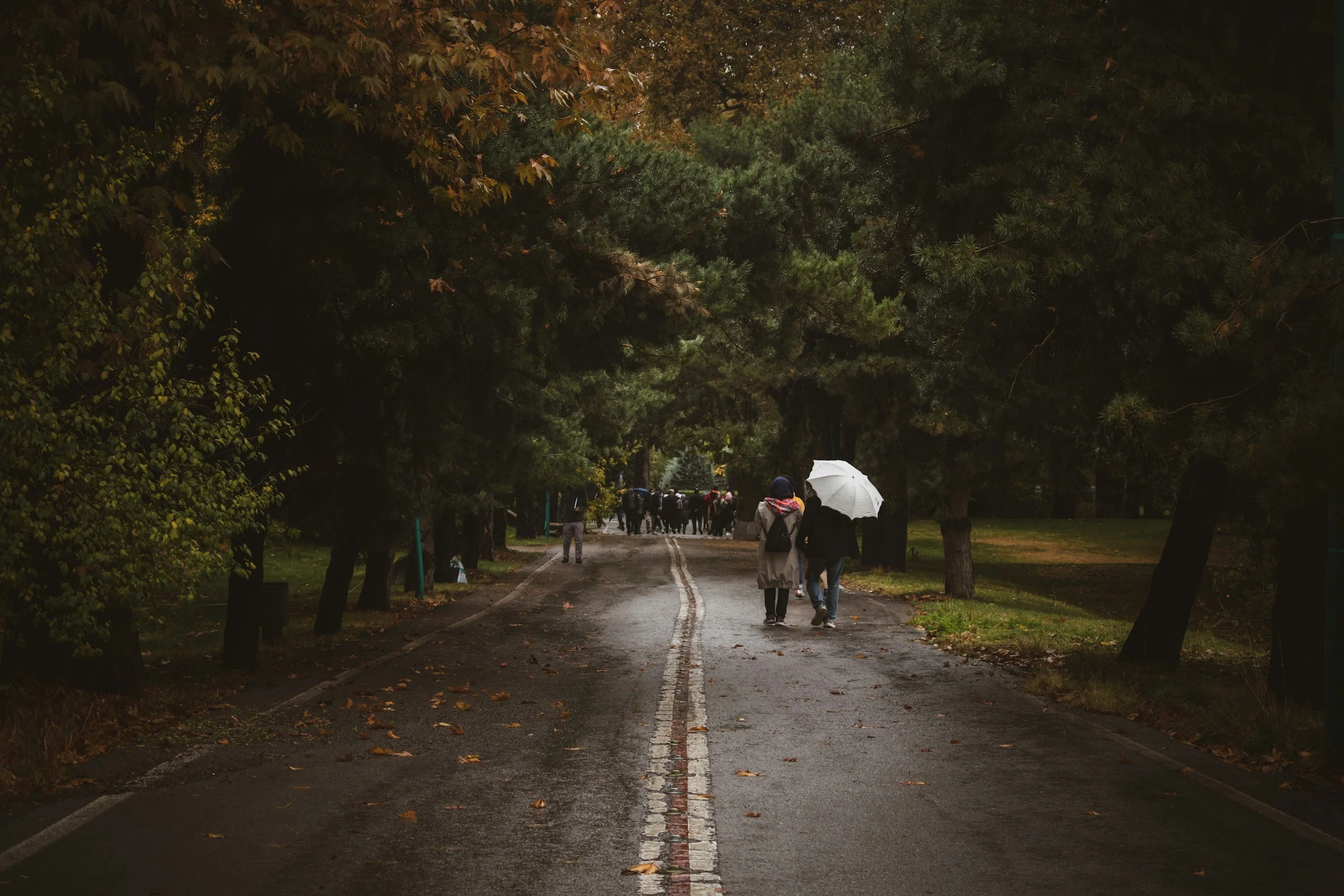
You don't have to wait for a sunny day to feel better. The trail is there in the drizzle too.
How to Bring Nature Into Your Mental Health: A Self-Help Guide
You don't need a therapist to start borrowing what the research offers. A few concrete places to begin:
Aim for the two-hour dose. The research points to roughly 120 minutes of nature a week as a meaningful threshold. Break it up however you like, a 20-minute walk most days gets you there.
Walk when you're stuck, not just when you're calm. If a worry is looping, take it outside. The research suggests movement in green space is one of the more reliable ways to interrupt rumination.
Go for "green and blue." When you can, choose routes with trees or water, the Edmonds waterfront, a wooded stretch of the Interurban Trail. Those environments appear to be especially restorative.
Leave the earbuds out sometimes. Let the ambient sound (birds, wind, water) do its quieting work. The point is to drop into the setting, not to distract yourself from it.
Pair movement with a hard conversation. If you need to talk something through with a partner or friend, try doing it on a walk. Side by side, moving forward, tends to soften what feels too pointed face to face.
Make it small and repeatable. The data found the biggest benefits at moderate, sustainable amounts, not marathon efforts. A short daily walk beats an occasional grueling hike.
Notice one thing each time. A tree you hadn't seen, the color of the Sound, the smell after rain. This gentle attention is a form of mindfulness that pulls you out of your head and into the present.
What a Session Outdoors Is Like
Self-directed walks are genuinely good for you. But there's a difference between feeling better on a walk and working through what keeps making life hard. And that's what therapy adds.
The nervous-system calm that movement and nature provide isn't just a nice side effect; it's a doorway. When your body is regulated, painful material becomes accessible in a way it often isn't when you're braced and guarded on an office couch. As a relational, attachment-based, and trauma-informed clinician, I use that regulated state as the ground for the real work, gently processing old experiences, understanding the patterns you keep repeating, and making sense of feelings that have been hard to reach. Walking beside a client, rather than across from them, also changes the relationship itself: it can feel less like being examined and more like being accompanied, which for people carrying relational or attachment wounds can be quietly powerful.
There's also the matter of co-regulation, the way a calm, attuned presence helps your own system settle. Nature and movement do part of this; a therapist trained to track what's happening in your body and your story does the rest, and over time you internalize that steadiness so you can find it on your own. Insight, processing, and a safe relationship are things no solo walk can fully provide, however restorative. Therapy braids the science of nature and movement together with the depth of a genuine therapeutic relationship.