
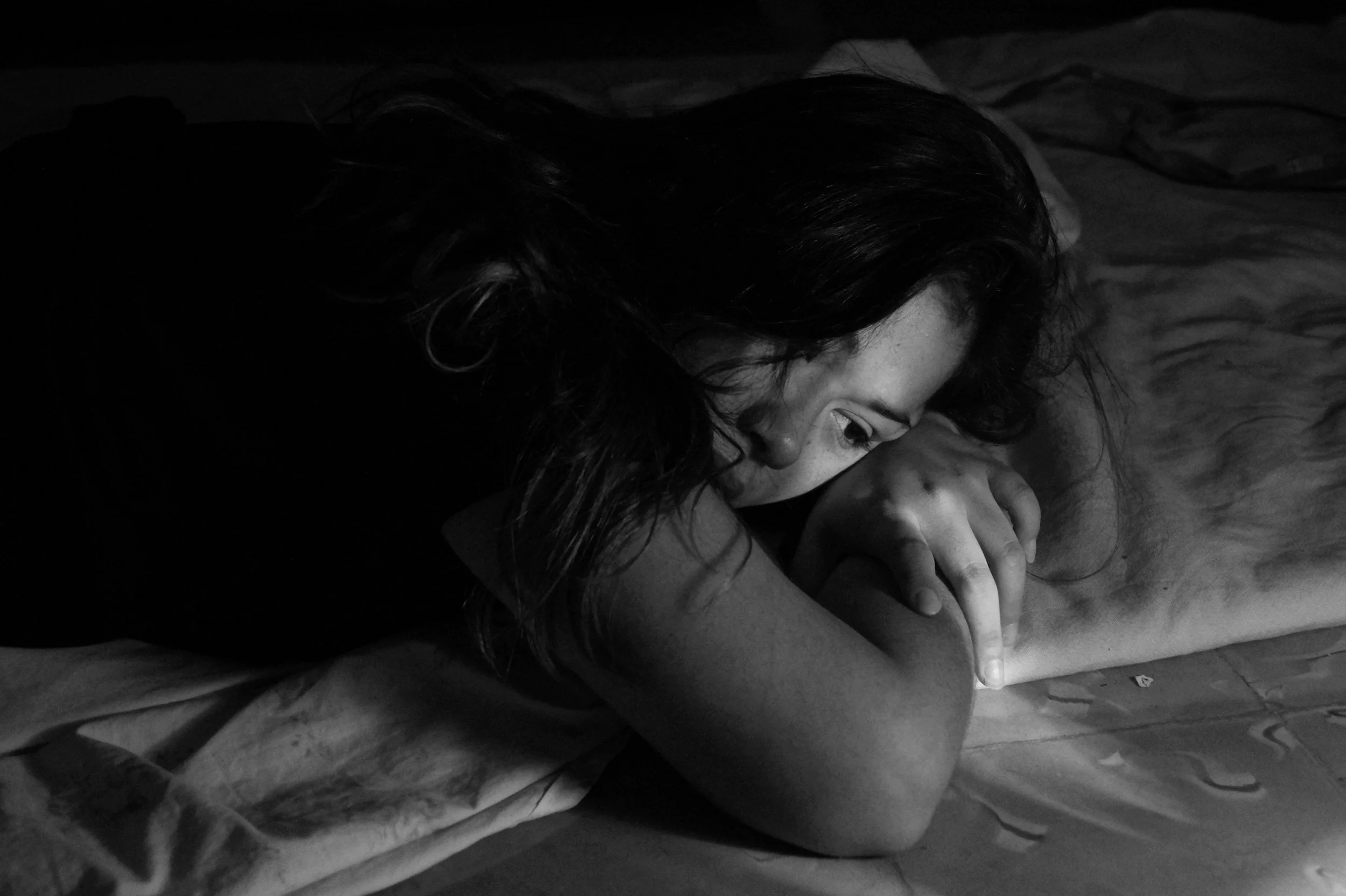
Touched Out: When You Crave Space From Your Kids
By the end of the day, your skin feels like it belongs to everyone but you. A baby was nursing, a toddler was climbing your leg, someone wiped their hands on your shirt, and now your partner reaches over to touch your shoulder — and every cell in your body recoils. You don't want to be touched. Not by anyone. Not for one more second.
If that flinch is followed by a rush of guilt — they're just showing love, what is wrong with me? — I want to name what you're feeling with the word it deserves: you're touched out. It's real, it's common, and it does not mean you love your family any less.

Why No One Warned You How Hard the Newborn Stage Would Be
You were told it would be tiring. You were shown the cute onesies and the tiny socks. Someone probably said, "Sleep now while you can," with a knowing little laugh. But nobody sat you down and told you the truth: that the newborn stage can feel like being broken open and asked to keep functioning anyway.
If you are in the thick of it right now — bleary-eyed, unshowered, holding a baby who will not stop crying at 3 a.m. and wondering what on earth you signed up for — I want you to hear something. You are not weak. You are not doing it wrong. This stage is genuinely, structurally, one of the hardest things a human being can be asked to do.

Raising Bilingual, Bicultural Kids Without Losing Your Own Identity
You want your child to speak your language — to understand their grandma on the phone, to feel at home in the culture that shaped you, to carry forward something precious. And also, quietly, it's exhausting. You're translating constantly, correcting mixed-up sentences, fielding relatives who worry the kids don't speak "enough," and navigating a world that often treats your heritage as optional or lesser. Somewhere in all that labor, you may wonder where you went.

Why So Many Women Grieve Miscarriage in Silence
Despite affecting an estimated 1 in 4 recognized pregnancies, miscarriage remains one of the most common yet least talked about experiences in reproductive health. Many women carry not only the heartbreak of losing a pregnancy, but also the burden of carrying that grief in silence.
I believe that healing begins when experiences that have lived in silence are finally given language. Because miscarriage is not "just a medical event." It is often the loss of imagined futures, changing identities, and dreams that had already begun taking shape.

How trying to be the perfect parent can backfire
Pregnancy and early parenthood are often portrayed as some of life's happiest seasons. While they can bring incredible joy, they can also bring anxiety, self-doubt, grief, exhaustion, and an overwhelming pressure to "get it right." Many new parents quietly wonder if they're doing enough while adjusting to one of life's biggest transitions.
Social media, family expectations, and cultural messages often reinforce the idea that good parents should always feel grateful, patient, and instinctively know what to do. The reality is much different. Parenting isn't about being perfect—it's about showing up with love, responding to your child's needs as best you can, and giving yourself the same compassion you offer your family.