

How to Stop Catastrophizing and Assuming the Worst
Your boss sends a message: "Can we talk later?" Within seconds, your mind has written the whole story. You're getting fired. You'll lose your income. You won't make rent. Your life is falling apart. By the time "later" arrives, you've suffered through a catastrophe that — nine times out of ten — turns out to be nothing at all.
This is catastrophizing: the mind's habit of leaping to the worst possible outcome and treating it as the likely one. If you do this, you're not irrational or dramatic. You have an anxious brain doing what anxious brains do, trying, in its own overzealous way, to protect you.

The Pressure of Being the "Reliable One" at Work
You're the one they come to.
Being the reliable one is a role rather than a personality, and it gets assigned rather than chosen. You catch the mistake. You stay late to fix it. You remember the deadline everyone else forgot. After enough of that, nobody thinks to ask whether you have the capacity, because the answer has always been yes.
If that's you, this post is for you. Because being dependable is a real strength — and it can also quietly wear you down until there's nothing left. The trick is holding onto the strength without paying for it with yourself.

Love Across Cultures: Navigating Intercultural Relationships
You fell in love with someone who sees the world a little differently than you do. Maybe they grew up speaking another language, celebrating holidays you'd never heard of, in a family with rhythms and rules unlike your own. Part of what drew you in was exactly that difference — the way they widened your world.
And then real life arrived. Whose family do you visit for the holidays? How do you raise the kids? What does "close family" actually mean, and how much say do parents get? Suddenly the very differences that once felt exciting can feel like a daily negotiation.
Intercultural relationships are rich, expansive, and beautiful. They also ask more of you. If you love across cultures, this is for you.

First-Generation and Exhausted: The Hidden Weight of Being the One Who "Made It"
On paper you are the success story: the degree, the job, the apartment, the salary your parents could only imagine when they arrived here with a suitcase and a prayer. What the paper doesn't show is how tired you are, or how little of that exhaustion you feel entitled to mention.
So why are you so tired?

How to Handle Social Anxiety at Parties and Gatherings
The invitation arrives and your stomach drops. You spend days dreading it. The night of, you stand outside the door for a moment, heart pounding, rehearsing what you'll say. Once inside, you're hyper-aware of every pause in conversation, convinced you're being boring, awkward, or judged. You count the minutes until you can leave — and then replay every interaction on the drive home, cringing.

Postpartum Anxiety Is Real (and It's Not Just the Baby Blues)
You expected to feel tired. Maybe you even expected to feel a little weepy. What you didn't expect was the racing heart at 3 a.m. while the baby sleeps peacefully beside you. The endless mental checklist. The way your mind keeps scanning the room for danger that isn't there.
If your new-parent experience has been colored less by sadness and more by a relentless, buzzing fear, you are not overreacting, and you are not alone. Postpartum anxiety is real, it is common, and it is far too often dismissed as "just the baby blues."

What Anxiety Actually Does to Your Body
People who arrive convinced that something is medically wrong with them are not wrong about the sensations. The pounding heart, the tight chest, the stomach in knots, the hands that won't quite stop trembling: all of it is real, measurable and happening in the body. What gets misread is the cause.
Here's what I often tell clients in that moment: your body isn't broken. It's doing exactly what it was built to do. It's just doing it at the wrong time, and far too often.

Burnout Recovery: Why a Vacation Won't Fix It
The vacation works for about four days. You slept in, you saw the ocean or the mountains, you finally stopped checking Slack, and by the Wednesday after you got back you were exactly as depleted as before, with the added sting of realizing the break didn't take.
If that's you, I want to say this plainly: you are not doing recovery wrong. Burnout is not a rest deficit that a vacation can repay. It's a deeper depletion, and it asks for deeper repair.

What Is Cultural Identity Confusion — and Why It Feels So Isolating
There's a specific loneliness that comes from belonging to two worlds and feeling fully at home in neither.
Maybe you're too "American" for your family and too "foreign" for your friends. Maybe your Spanish isn't good enough for your grandmother, but your accent still marks you as other in the room. Maybe you code-switch so fluidly that you've started to wonder which version of you, if any, is the real one. There's a phrase that captures this ache so precisely it's become a kind of shorthand across the Latino diaspora: ni de aquí, ni de allá. Not from here, not from there.

Signs You're Heading Toward Burnout (Before You Crash)
Nobody wakes up burned out overnight.
Burnout is a slow slide, not a sudden fall. It builds so gradually that you often can't see it happening — you just adapt, again and again, to feeling a little worse, until one day you realize you're running on fumes and can't remember when that started. By then, recovery takes far longer than it would have if you'd caught it earlier.
That's why the early signs matter so much. If you can recognize the warning signals while you're still on the runway, you have options you won't have once you've crashed. This post is about learning to read your own dashboard before the engine gives out.

Matrescence: The Identity Shift No One Warns You About
Everyone prepared you for the sleepless nights. Someone gave you a book about feeding. There were classes on breathing and birth. But no one sat you down and said: You are about to become a different person, and the woman you were will grieve.
You expected your body to change. You didn't expect to look in the mirror and feel like a stranger. You didn't expect to love your baby fiercely and also, in the same breath, mourn a self who feels suddenly, impossibly far away.
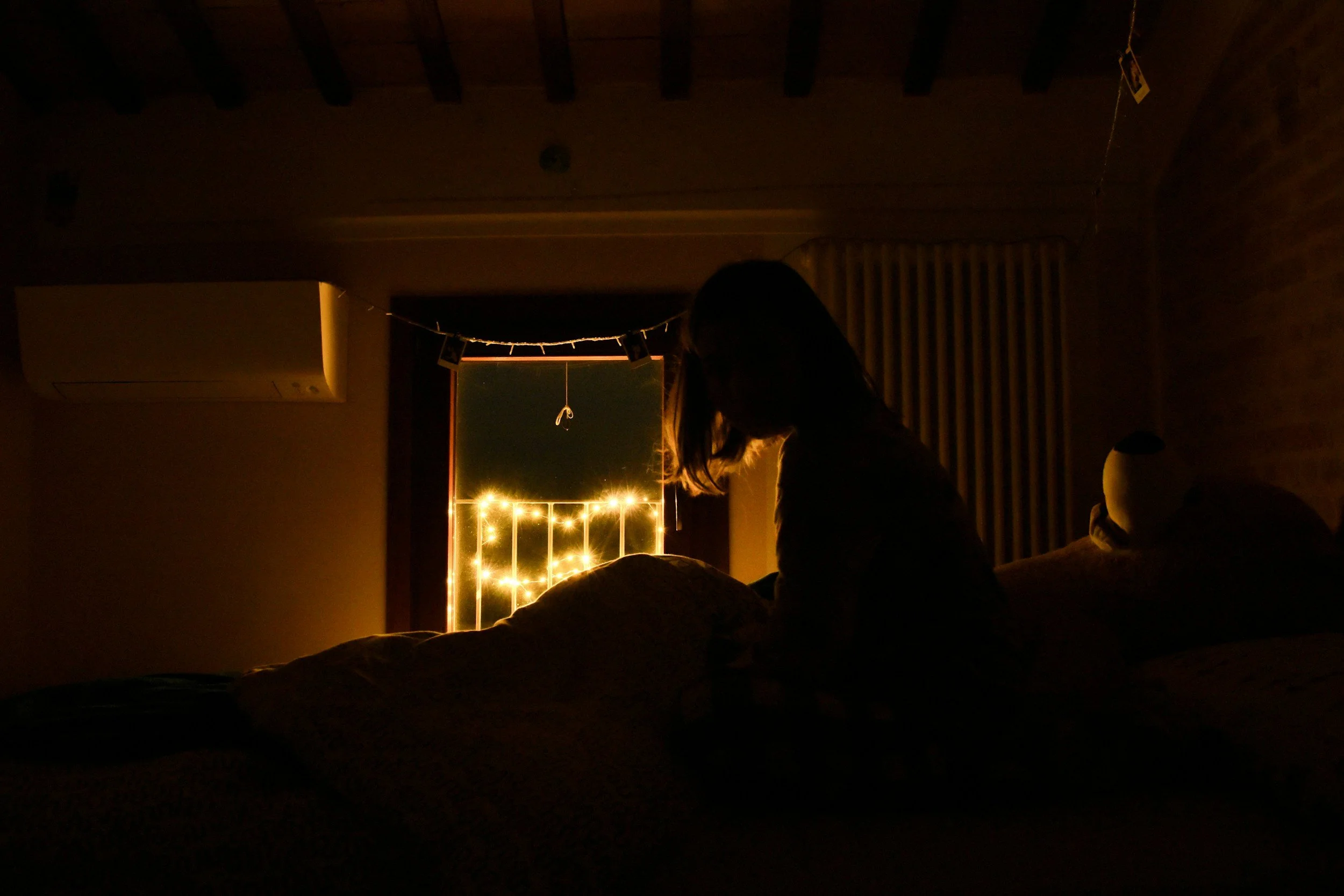
How to Stop Overthinking Everything at Night
Nothing about the day was unmanageable. Then the light goes off and your brain clears its throat and begins its nightly presentation: the awkward thing you said in 2014, the email you should have worded differently, the future you can't control, the money, the health, the people you love.
During the day you were too busy to notice these thoughts. Now, in the dark and the quiet, there's nothing left to drown them out.

The High Achiever's Trap: Why Success Never Feels Like Enough
Success has a shelf life of about an afternoon. The promotion came through, the offer was accepted, the project shipped, and for a day it registered as satisfaction before draining out and leaving the target somewhere further off than it was before.
If that sounds familiar, you're not ungrateful, and you're not broken. You may be caught in what I think of as the high achiever's trap: a pattern where accomplishment never translates into a lasting sense of enough. In my practice, some of the most driven, capable people I meet are also the most quietly exhausted — because they've organized their whole sense of worth around the next achievement.

How to Stop Anxious Thoughts From Spiraling
A spiral almost never starts with something big. An unanswered text will do it, or a comment your boss made, or a twinge somewhere in your body. Ten minutes later one thought has multiplied into ten, each worse than the last, and you have traveled from she seemed a little off today all the way to I'm going to lose this friendship and end up completely alone.
This is the anxiety spiral — and if you've been caught in one, you know how real and consuming it feels. The good news is that a spiral is a pattern, and patterns can be interrupted. You are not doomed to ride every runaway train of thought to its terrifying destination.