
Sometimes the Best Therapy Begins with a Walk Outside
We spend most of our lives indoors, lit by screens, moving from one responsibility to the next without much pause in between. Our bodies get to sit down. Our minds almost never do.
In my practice, I meet a lot of people who have been running on that kind of low-grade stress for so long that it no longer registers as stress. It registers as normal. Tired is normal. Braced is normal. Checking your phone before your feet hit the floor is normal.
But your nervous system was never built for constant input. And one of the most reliable ways to give it a break costs nothing, requires no app, and is probably within a ten-minute walk of where you're sitting right now.
Nature is not a replacement for therapy, medication, or treatment for a serious mental health condition. What it can be is a real, measurable part of how you recover — and, for some people, the doorway into the rest of the work.
At Vida Counseling & Wellness, we tend to talk about healing as reconnecting: with yourself, with your emotions, with the people you love, with your values, with the world you actually live in. Time outside happens to be one of the few things that touches all five at once.
Why Nature Helps Us Feel Better
Our brains constantly scan our environment for information. Busy streets, emails, notifications, traffic, deadlines, and social media all demand directed attention—the type of attention that eventually becomes mentally exhausting.
Natural environments ask something different of us.
Instead of demanding our attention, they gently invite it.
Psychologists call this Attention Restoration Theory, which suggests that natural settings allow our cognitive resources to recover after prolonged mental effort. Rather than fighting for our attention, nature effortlessly captures it through birdsong, moving leaves, flowing water, and changing light.
The result? Many people notice they feel calmer without even trying.

Your mind may not need more information right now. It may need more natural space.
Why Your Brain Feels Different Outside
All day long, your attention is being spent. Traffic, notifications, unread email, deadlines, the group chat, the news — each one asks you to direct your focus deliberately, and that kind of effortful attention is a finite resource. When it runs low, you don't necessarily feel "stressed." You feel scattered, irritable, and strangely unable to make small decisions.
Natural environments ask something different of you. They hold your attention without demanding it — birdsong, moving water, shifting light, leaves doing what leaves do. Psychologists call this Attention Restoration Theory, and research has been steadily testing it rather than just asserting it. A 2008 series of experiments found that a walk in a park measurably improved performance on demanding memory and attention tasks, while an equally long walk through downtown streets did not, which suggests the restoration comes from the type of environment rather than the exercise alone. A 2016 systematic review examining dozens of studies found reasonably consistent support for attention benefits in natural settings, while noting that effects vary by how attention is measured — a useful reminder that this is a real finding, not a miracle.
This is why so many people describe the same experience without knowing the theory behind it: they went outside intending to think something through, and instead they simply stopped thinking so hard.
What Happens in the Body
Many clients describe anxiety as being "stuck on." The body stays prepared for danger long after the danger is gone — jaw tight, shoulders up, stomach unsettled, sleep shallow.
Time outdoors appears to nudge that system back toward regulation. Research published in 2010 measuring people across two dozen forest sites in Japan found lower cortisol, lower pulse rate, lower blood pressure, and greater parasympathetic (rest-and-digest) activity after time in the forest compared with matched time in a city environment — physiological evidence that the calm people report isn't only psychological.
The forest-bathing tradition this research comes from, shinrin-yoku, has since been studied more rigorously. A 2020 systematic review and meta-analysis pooling trials of forest bathing found meaningful reductions in anxiety, with smaller and less consistent effects on depression — and the authors were candid that many of the studies were small and methodologically uneven. That honesty matters. The effect is real. It is also modest, and it works best as one part of a broader approach rather than as a stand-alone cure.
When your nervous system does begin to settle, the downstream changes are the ones that actually matter in daily life. It becomes easier to:
think clearly instead of in loops
make ordinary decisions without dread
be present with the people around you
tolerate a difficult feeling without needing to fix it immediately
respond rather than react
This isn't about escaping stress. It's about giving your nervous system chances to recover from it.
Nature and the Loop in Your Head
If there's one finding I bring up most often with anxious and depressed clients, it's this one. Rumination — the repetitive, self-focused replaying of what went wrong and what's wrong with you — is one of the strongest maintaining factors in both anxiety and depression. It's also notoriously hard to simply stop.
Research from 2015 tested whether the environment itself could interrupt it. Participants who took a 90-minute walk through a natural setting reported less rumination afterward and showed reduced activity in the subgenual prefrontal cortex — a brain region associated with self-focused, brooding thought — while those who walked the same duration along a busy road showed neither change. In other words, the loop quieted down without anyone trying to argue with it.
That's a genuinely different mechanism from most self-help advice. You are not talking yourself out of the thought. You are putting yourself somewhere that gives the thought less to grip.
Mindfulness Outside Beats Mindfulness Indoors
Walking through a park helps. Walking through a park while actually present helps more.
A 2019 systematic review and meta-analysis comparing mindfulness practiced in natural settings against equivalent practice indoors found larger improvements in psychological well-being for the outdoor conditions — a moderate effect, drawn from a modest number of studies, but pointing in a clear direction.
The reason is almost mechanical. Indoor mindfulness usually means manufacturing focus: sit still, follow your breath, notice you've drifted, start over. Outside, the anchors are already there and they're more interesting than your breath — the temperature on your face, a bird you can hear but not see, sunlight through branches, cedar after rain, your feet meeting the ground. Attention goes where it's invited. Yesterday and tomorrow lose some of their pull.
You Don't Need a Wilderness, or Hours
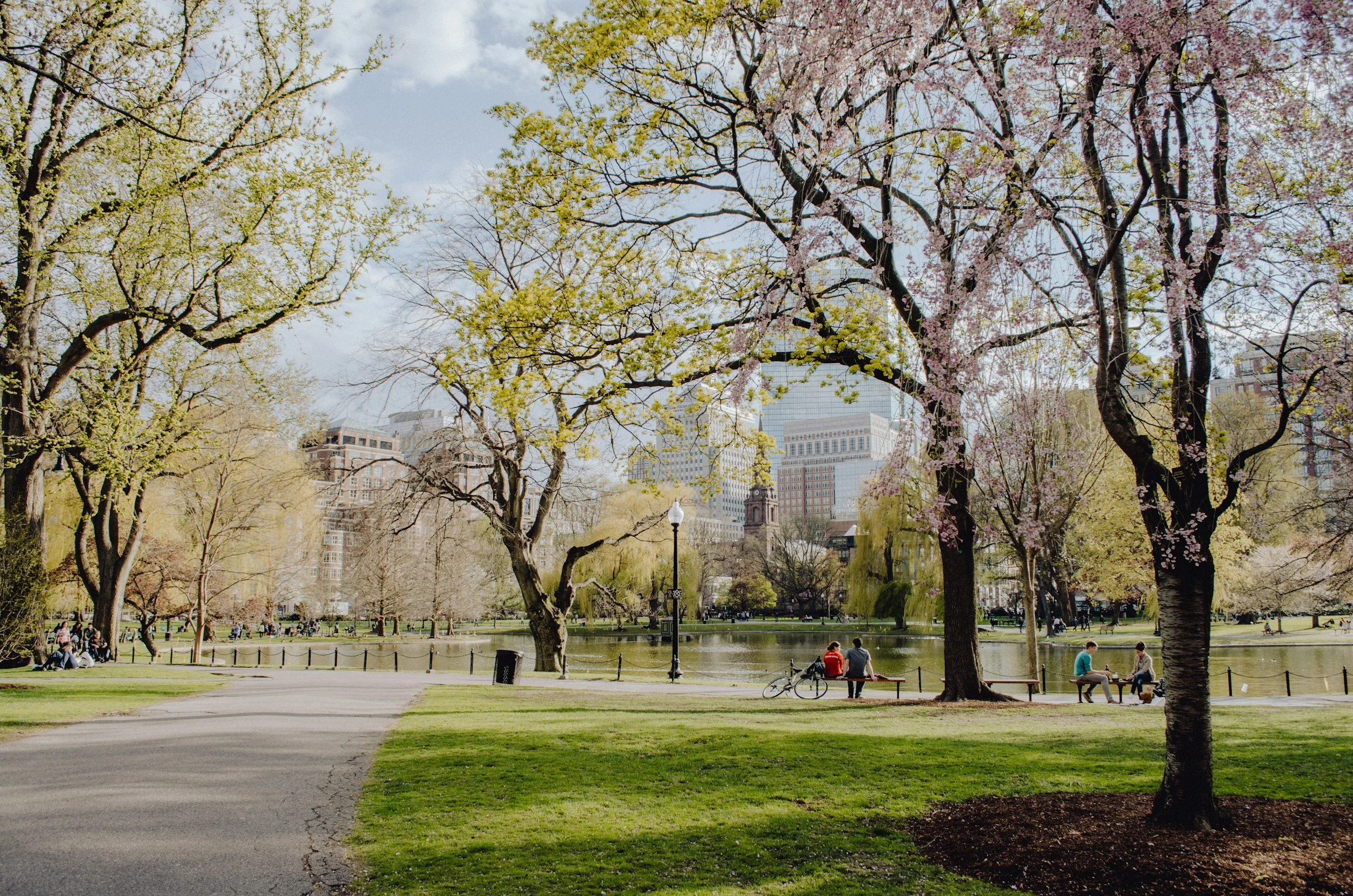
The most common misconception I hear is that this requires a trailhead and a free Saturday. It doesn't, and the research is fairly encouraging on that point.
A large 2019 study of nearly 20,000 people found that those reporting at least 120 minutes a week in nature were significantly more likely to report good health and high well-being — and that the benefit held whether that time came in one long visit or several short ones, and whether the green space was a national park or a neighborhood one. Below 120 minutes, no reliable benefit; above roughly 200–300 minutes, no further gain. Roughly seventeen minutes a day is enough to be in range.
Dose research from 2010 pointed the same way: as little as five minutes of green exercise produced improvements in mood and self-esteem, with the presence of water amplifying the effect — which is convenient news if you live anywhere near Puget Sound.
Consistency, in other words, matters more than intensity. A greenbelt trail, a waterfront bench, a garden, a tree-lined block on the way home. Small doses, often.
A Self-Help Guide: Bringing More Nature Into Your Week
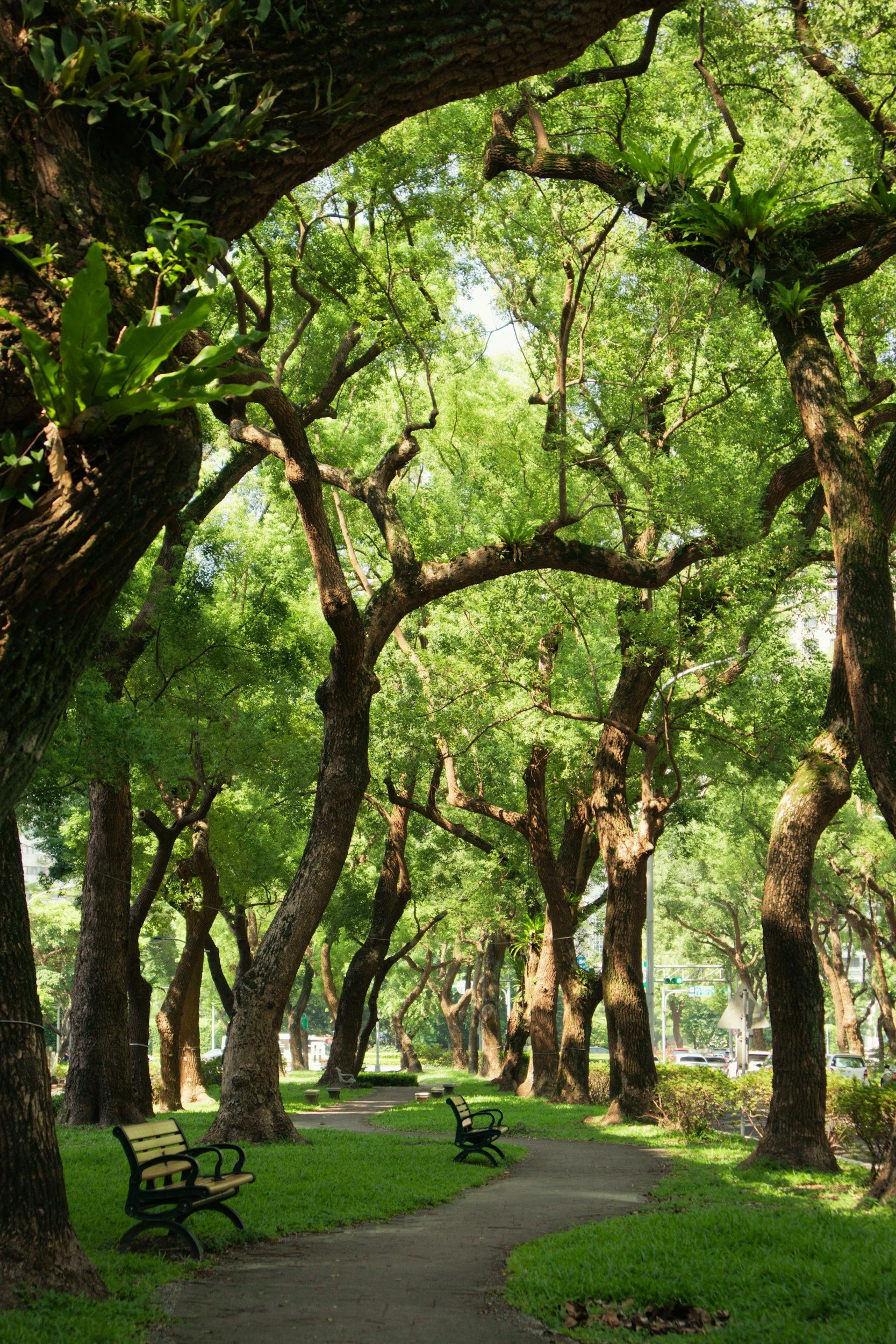
You don't need to become an outdoors person. Pick one or two of these and let them be unimpressive.
Aim for two hours a week, however you can get them. Seventeen minutes a day, or two longer walks on the weekend — the research suggests the total is what counts, not the format. Put it in your calendar the way you would a meeting.
Take one walk without headphones. Fifteen to twenty minutes, deliberately slow. Notice five things you can see, four you can hear, three you can feel, two you can smell, and one you're glad exists. When your mind wanders back to the loop, that's expected — come back to a sound.
Claim a sit spot. One bench, one back step, one corner of a park. Return to it. Ten minutes of observing without trying to accomplish anything. Familiarity is part of what makes it restful.
Attach outside to something you already do. Coffee on the porch. Phone calls while walking. Lunch outdoors. Reading under a tree instead of on the couch. Habits stick when they borrow an existing one.
Go toward water when you can. Waterfronts and shorelines show some of the strongest mood effects in the dose research — and in this region, they're rarely far away.
Let bad weather count. In the Pacific Northwest, waiting for a nice day is a way of never going. Rain gear reframes eight months of the year.
Notice what shifted, without grading it. After a walk, ask one question: is anything in my body different than it was? Not better — different. That's how you learn what your own nervous system responds to.
How Therapy Can Help
Nature can quiet the volume. It usually can't answer the question underneath the noise.
If you've been anxious for years, if the exhaustion has a grief in it, if the same relational pattern keeps reappearing with different people, if going outside helps for an hour and then everything closes back in — that's not a sign you did the walk wrong. It's a sign there's something asking for more than regulation. Therapy is where we look at what your anxiety has been protecting you from, where the bracing was learned, and what would have to change for rest to feel safe rather than negligent.
For some clients, we do that work outdoors. Walk-and-talk therapy suits people who think better in motion, who find sustained eye contact effortful, or who have spent a lifetime being told to sit still and perform. Side by side, at walking pace, with somewhere to look — hard things often get said sooner.
If you're not sure whether that's for you, that's a fine thing to be unsure about out loud in a first conversation.
About the Author
Dania Uritskiy, LICSW, is a licensed therapist and the founder of Vida Counseling & Wellness. She offers walk-and-talk nature therapy alongside her work with anxiety, chronic stress, life transitions, and multicultural therapy, using a relational, psychodynamic, and culturally responsive approach. She sees clients in Lynnwood and Edmonds, walks with clients on trails around Edmonds, Shoreline, Mountlake Terrace, and North Seattle, and provides telehealth throughout Washington State. She works in both English and Spanish. Some of the most honest sessions she's been part of happened while walking, in the rain, looking at the water instead of at each other.